Archive for the ‘diving’ Category

Diving in The Society Islands

Wednesday, December 2nd, 2009

The archipelago is divided into two parts of mountainous islands: the Windward Islands, such as Tahiti and Moorea and the Leeward islands such as Bora Bora, Raiatea, Taha’a, and Huahine. French Polynesia counts approximately 260,000 inhabitants. More than half of the population lives on the main island. Tahiti. (l thought it was 60%). The  capital city is Papeete and the international
airport is located on the main island of Tahiti as well.

ACCOMODATIONS

The Society Islands have a wide choice of luxury and intermediate hotels as well as family hotels.

SCUBA DIVING
The conditions are excellent and the dive sites are ideal for divers of all levels. The quiet lagoon is the perfect place for an introductory or a refresher dive amongst the exceptional underwater sea life. Most dives are organized close to the passes. You will probably encountered impressive animals such as black tip sharks, grey sharks, jackfish, Napoleon fish or manta rays.

CAN WE DIVE IN A PASS ?
The lagoon level and the current in the channels may vary depending on the strength and direction of the swell. When the swell fills in the lagoon. the excess water is pushed through the pass. The current in the Society archipelago is always outgoing and requires divers to be cautious. Thus, your diving guide will know how to adapt your dives taking this phenomenon into account.

WINDWARD ISLANDS - NIMATAI
The trade wind blows in from the east and crosses the archipelago meeting this group of islands first. Tahiti and Moores are the most famous islands with their rugged lush mountains. They are usually the divers first stop. You will find many dive shops there, and some of them are located within the luxury hotel resorts.

TAHITI, THE QUEEN OF THE PACIFIC
The main island is often viewed as a stopover upon arrival or departure. However, it has a lot to offer and it is the perfect place to discover both the chiseled mountainous interior and the amazing underwater sites. Whether you are walking. riding a 4WD or a helicopter, or wreck diving, the scenery is phenomenal. You will also enjoy wandering around the downtown traditional, colorful market to do your last minute shopping.

MOOREA, THE MAGICAL ISLAND
Tahiti and Moorea are only 17 km (11 miles) apart. Moorea is easily accessible by plane or ferry throughout the day. You will arrive in a totally different world. There, everything is calm and peaceful.
Moorea shelters two large, stunning bays. The famous Cooks Bay is one of them but surprisingly enough; Captain Cook actually arrived in the adjacent bay of Opunohu ! The island is well known as a dive destination thanks to the development of shark feeding. This activity has allowed us better understand sharks and offer tourists and divers the opportunity to discover these fascinating creatures. The lemon sharks are a must to encounter! Nowadays, the activity is still carried out by some dive centers but is also subject to a local government regulation. Some dive schools also offer a PADI specialty named “Sharks of French Polynesia”.

TAHITI DIVING SPOT

  1. Aquarium - Lagoon, Max depth 36ftMap Diving TAHITI
  2. The Wrecks - Lagoon, Max depth 36ft
  3. The Saint Etienne Drop-Offs - Ocean, Max depth 180ft
  4. The Springs - Ocean, Max depth 75ft
  5. The Maruata - Ocean, Max depth 75ft
  6. The Lagoon Iiole - Lagoon, Max depth 81ft
  7. The Gorgonias - Ocean, Max depth 150ft
  8. Le Vavi - Ocean, Max depth 180ft
  9. La Marado - Ocean, Max depth 180ft
  10. La Zélée - Ocean, Max depth 54ft

THE AQUARIUM:
There is no current, the water is warm and clear water in the lagoon while the bottom is composed of white sand in this lagoon… It is definitely the ideal gateway to Nemo’s world

LA ZELEE:
On September 22nd, 1914, the “Zelee” battle ship suffered severe damage from the fire of German cruisers named Sharmhortz and Geneisenan. The Germans were attempting to get into the harbor but was for provisions of food and coal. The ship sank in the harbor but was later moved on the outer reef between 7 and 18 meters (23 and 55 feet) of depth. It has become an artificial reef and shelter to numerous coral reef fish species including several Javanese moray eels.

MOOREA DIVING SPOTMap Diving Moorea

  1. Tiki - Ocean, Max depth 90ft
  2. Hauru - Ocean, Max depth 75ft
  3. Taotoi - Ocean, Max depth 75ft
  4. Stringray - Lagoon, Max depth 60ft
  5. The Coral Wall - Ocean, Max depth 90ft
  6. Les Anémones - Ocean, Max depth 54ft
  7. Les Canyons - Ocean, Max depth 90ft
  8. The Roses Garden - Ocean, Max depth 150ft
  9. Temae - Ocean, Max depth 90ft
  10. Opunohu - Pass, Max depth 90ft

OPUNOHU:
Sheltered from the trade winds, Opunohu pass is a large area which most dive centers like to visit. lt is also among the most diversified dives of the island with many canyons, drop offs and caves. Black tip and lemon sharhs are accustomed to divers and under water photographers. You may also encounter friendly turtles and schools of surgeonfish and snappers.
Further down (40 meters / 130 feet), the most experienced divers will marvel at the coral mse garden.

TIKI:
Located on the northwest point of the island the strength and direction of the current changes quickly. This is the ideal habitat for a school of grey sharks, which have settled here. It is an easy and very educational dive, watching and learning more about their behavior.
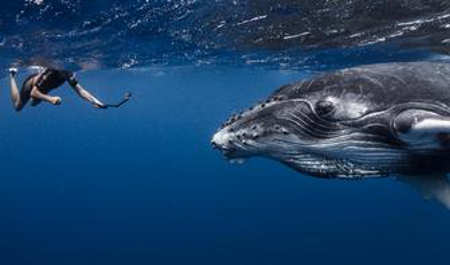
During the humpback whale season from July to November; you may hear the singing of a male announcing his presence to other whales in the area.

RAIATEA DIVING SPOTMap Diving Raiatea

  1. Miri Miri - Ocean, Max depth 75ft
  2. Miri Miri Pass - Ocean, Max depth 90ft
  3. Nordby - Lagoon, Max depth 87ft
  4. Teavapiti Pass - Pass, Max depth 84ft

NORDBY :
This Danish three-mast Cape Hornier schooner had journeyed the world’s oceans by 1900. While cruising from Auckland, New Zealand en route to Liverpool, England, the ship stopped in Raiatea. She anchored in Tepua on the 25th of August to unload goods. A very strong storm carried her to the reef where she slowly sank. Now, the 50 meter / 164 feet) long wreck is located at the bottom of a hotel dock. lying on her port side, it is an easy dive. There is a huge bubble of air stuck in the ship and you can stick your head out of the water while being at I5 meters (50 feet) of depth. It is a great place to see numerous nudibranches as well.

TEAVAPITI PASS:
At a depth of l5 meters (50 feet), there is an underwater plate that crosses the pass from one side to the other. A young grey shark nursery has settled there. It is very unique to watch so many young sharks play in such shallow mater.

TAHA’A DIVING SPOTMap Diving Tahaa

  1. Ceran Pass - Pass, Max depth 150ft
  2. Paipai Pass - Pass, Max depth 90ft
  3. Tao Tao - Ocean, Max depth 120ft
  4. Toomaru - Lagon, Max depth 75ft
  5. Ivy - Lagon, Max depth 54ft
  6. Côte 323 - Ocean, Max depth 75ft

PAIPAI PASS:
Paipai Pass is located on the west coast of Taha ‘a. Fish life is varied within the pass. On the right side, you see a wall covered in yellow coral. For more experienced divers, at a maximum depth of 30 meters (100 feet), you will encounter the ma ‘o mamaru (white tip sharks). On the left side of the pass, the dive is more shallow (15 to I8 meters - 50 and 60 feet). You will see a profusion of life such as Napoleon fish, eagle rays, tuna, moray eels, barracudas, surgeonfish and parrofish.

COTE 323:
On the outer reef, known as Tapu Tapu, the conditions are usually very pleasant and the depth ( 30 meters - 100 feet) allows any diver to enjoy the site. The water visibility is excellent. The drop of offers large coral heads sheltering many angelfish, lionfish, butterfly fish and turtles. Be careful not to touch a piece of fire coral (unless you want to learn how it received the name!).

HUAHINE DIVING SPOTMap Diving Huahine

  1. Avapeihi Pass - Pass, Max depth 100ft
  2. Fa’a Miti - Ocean, Max depth 90ft
  3. Hana Iti - Lagoon, Max depth 36ft
  4. The Coral City - The Roses - Ocean, Max depth 150ft
  5. L’Aquarium - Lagoon, Max depth 60ft
  6. Parea Pass - Pass, Max depth 75ft
  7. The Avea Beach - Lagoon, Max depth 18ft
  8. Parea Slope - Lagoon, Max depth 60ft
  9. The Yellow Valley - Pass, Max depth 100ft

AVAPEIHI PASS:
This dive is considered an exception to the rule! It is the only dive starting from the outer reef and going into the lagoon through this pass. A massive school of jackfish from 7 meters (23 feet) to the surface will greet you. Further down, (15 meters / 50 feet) you will come upon a school barracudas. Ther look still, like they are suspended in between the water and the weak current.
Around 25 meters (80 feet) you will enjov diving with eagle rays and paddelfish.

FA’A MITI :
Fa’a Miti is located on the ocean side, but well protected from the swell, wind and current. The spot is open to all divers. The outer slope is mild and covered in a multitude of corals. As soon as you start your descent a few black tip sharks and Napoleon fish will come and greet you.  Many small colorful butterfly, unicorn fish, surgeontish will follow you and your guide throughout the dive. The highlight of the dive is definitely the moray eels going out to swim around you. The dive ends in a valley in a cave like scenery where lionfish are well hidden.

MAUPITI DIVING SPOTMap Diving Maupiti

  1. Airport Place - Ocean, Max depth 69ft
  2. Fred’s Spot - Ocean, Max depth 75ft
  3. Fausse Pass - Lagoon, Max depth 12ft
  4. Coral Garden - Lagoon, Max depth 12ft
  5. Nemo - Lagoon, Max depth 30ft
  6. Vertige de Maupiti - Ocean, Max depth 75ft

CORAL GARDEN:
Protected from the trade winds, this site is located on the north side of the island. This lagoon shelters rich fauna with beautiful and healthy coral. It is the perfect spot to learn to scuba diving or snorkel through “the underwater path”. Out of the hundreds of different fish species, you will encounter black tip sharks, many eagle and stingrays, but also jackfish, goatfish surgeonfish,
cleaning wrasses and many other invertebrates.

FRED’S SPOT:
Located behind Auira Motu on the ocean side, Chez Fred offers a mild drop off from the surface to 20 meters (65 feet) below before it turns into sharper walls with a succession of steps. Grey and black tip sharks swim along the walls and nurse sharks hide inside small caves on the coral plate.

BORA BORA DIVING SPOTMap Diving Bora Bora

  1. Toopua - Lagoon, Max depth 110ft
  2. Anau / Fafapiti - Lagoon, Max depth 110ft
  3. Aquarium - Lagoon, Max depth 15ft
  4. Teavanui Pass - Pass, Max depth 120ft
  5. Haapiti - Ocean, Max depth 120ft
  6. Muri Muri - Ocean, Max depth 180ft
  7. Tupitipiti - Ocean, Max depth 180ft
  8. Turiroa - Ocean, Max depth 135ft
  9. Tapu - Ocean, Max depth 120ft

TAPU:
Tapu is the name of the motu used as an indication to locate the dive site holding this name. It is situated on the outer reef, left of Teavanui pass, Bora Bora’s unique pass. Photographers and divers seeking excitement will be overwhelmed by massive lemon sharks that will greet you at a depth of 25 meters (80 feet). Definitely not shy, the lemons will swim around you and come very close
to your camera.

MURI MURI:
Also named “the white valley”, is covered 40 meters (130 feet) below with a long bright, white sand path surrounded by coral. lt leads the divers to a large garden eel colony. The visibility is fabulous and there is no doubt that you will see the large school of jackfish and barracudas likely to join your dive group. At the end of the dive, you will admire the beautiful coral bed at the bottom before going back to the boat.

Nitrox for free in Tahiti

Friday, April 17th, 2009

Our today hat tip goes to the Eleuthera Dive Center based in Tahiti that announced NITROX for free !

Scuba diving with enriched air nitrox (containing higher than normal levels of oxygen) is advantageous in reducing nitrogen take up in the body’s tissues and so extending the possible dive time, and/or reducing the risk of decompression sickness.